


The Most Chilling Interview Ever Recorded: How Stephen McDaniel Exposed Himself
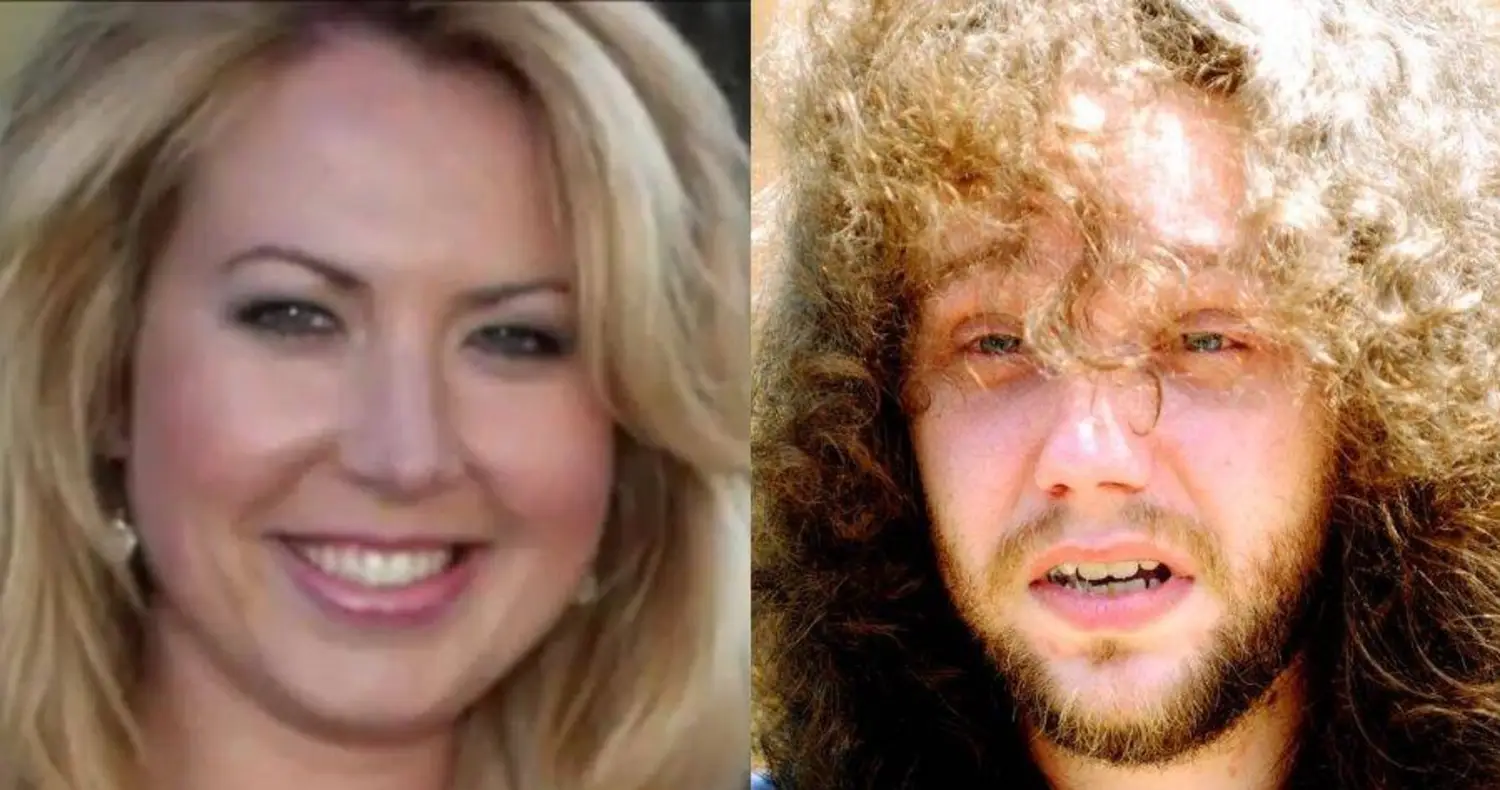
The Unraveling: When a Killer Faced the Camera
The security camera footage seemed routine enough: a neighbor expressing concern about a missing woman, speaking to local news reporters with what appeared to be genuine worry.
Stephen McDaniel described his neighbor as personable and kind, offering details about her disappearance with the careful precision of someone trained in law.
Then came the moment that would seal his fate. When the reporter casually mentioned that authorities had discovered a body, McDaniel’s carefully constructed facade shattered in real time, his face draining of color as panic overtook pretense.

Just days earlier, in the predawn hours of June 26, 2011, McDaniel had broken into the apartment of Lauren Giddings, his neighbor and fellow Mercer University law school graduate.
What transpired inside that apartment would reveal the darkest capabilities of a man who had hidden his violent obsessions behind the veneer of an aspiring attorney.
Giddings, 27 years old and on the cusp of beginning her career as a defense attorney, became the victim of a calculated and brutal murder that would shock the Macon, Georgia community.
When Giddings failed to appear for planned meetings and stopped responding to communications, her family and friends grew alarmed. By June 29th, they filed a missing person report. Local media picked up the story, and WGXA television station dispatched a camera crew to the apartment complex where Giddings lived
The footage they captured on June 30th would become one of the most chilling pieces of evidence in the case—not for what it revealed about the victim, but for what it exposed about her killer.
McDaniel’s performance during that interview initially seemed like nothing more than the appropriate concern of a neighbor and classmate. His descriptions of Giddings painted her as beloved and friendly. However, the instant he learned from the reporter that remains had been discovered, his composure disintegrated.
The word “body” seemed to strike him like a physical blow. His voice wavered, his eyes widened, and he stammered that he needed to sit down. While casual observers might have interpreted this as the natural shock of grief, law enforcement saw something else entirely.
Within 24 hours, police designated McDaniel as a person of interest. Subsequent investigation confirmed what detectives had suspected: McDaniel had not only killed Lauren Giddings but had dismembered her body with methodical precision.
The calculated nature of the crime, combined with the minimal prior contact between McDaniel and his victim, led investigators to a disturbing conclusion. Had circumstances not conspired to expose him so quickly, McDaniel’s violence would likely not have ended with one victim.
Behind the Mask: The Double Life of Stephen McDaniel
Born on September 9, 1985, Stephen McDaniel grew up in the suburbs near Atlanta, Georgia, in circumstances that offered few hints of the darkness to come. His childhood and adolescence followed unremarkable patterns, though he demonstrated sufficient academic aptitude to gain admission to Mercer University’s law school.
Lauren Giddings attended the same institution, both working toward degrees that should have launched successful legal careers.
By 2011, McDaniel and Giddings had settled into separate units within the same apartment complex near campus. At 25, McDaniel appeared to be in a state of transition, his lease expiring in two weeks with plans reportedly set to move back to his parents’ home.

Giddings, two years his senior at 27, was preparing for the bar examination with the kind of focused determination that characterized her approach to life. She had already secured prospects for employment as a defense attorney, her future bright with possibility. While she studied legal precedents and case law, McDaniel was planning something far more sinister.
Surface impressions suggested McDaniel was an unlikely candidate for extreme violence. According to the Macon Telegraph, his imminent departure from the apartment complex seemed to indicate a man simply moving on to the next phase of life.
Yet beneath this mundane exterior, police would uncover a disturbing psychological landscape. Digital forensics revealed extensive internet activity in which McDaniel expressed virulent misogyny and detailed fantasies about torturing women.
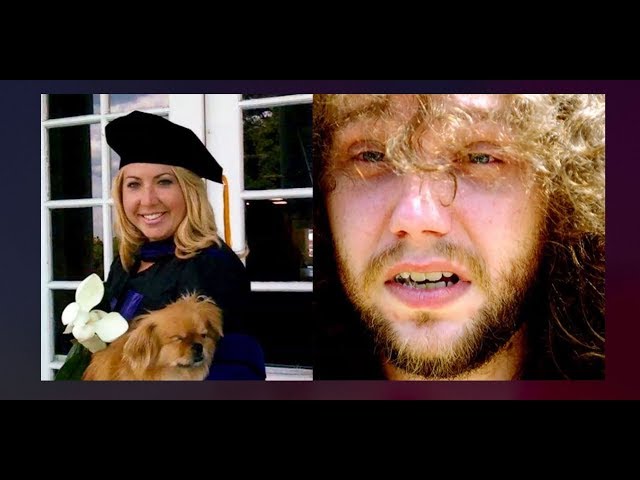
His apartment told its own strange story: stockpiles of food and energy drinks suggested survivalist tendencies, while his admission to investigators that he frequently wore the same underwear for multiple consecutive days painted a picture of someone disconnected from normal social functioning.
McDaniel’s romantic life had been characterized by repeated failure and frustration. Despite maintaining an eHarmony profile, he secured few dates and claimed to be a virgin saving himself for marriage. This self-proclaimed celibacy stood in stark contradiction to the condoms police later discovered in his apartment—a detail that would prove significant in establishing his true intentions.
The investigation accelerated on the morning of June 30th when Giddings’ dismembered torso was found in a trash receptacle near the apartment complex. Police immediately brought all nearby residents to the station for voluntary interviews, none yet aware that remains had been located.
Every neighbor consented to apartment searches—except McDaniel. He invoked his legal education as justification, claiming he was “protective of his space” because of his attorney training.

After persistent pressure, he permitted a single detective to conduct a walkthrough, insisting on accompanying the officer throughout. His reluctance became comprehensible once investigators eventually obtained a proper search warrant and discovered Giddings’ undergarments concealed in his residence, along with a stolen master key that had granted him unauthorized access to her apartment.
McDaniel’s suspicious behavior earned him heightened scrutiny from law enforcement. Rather than distance himself from the investigation, he lingered near the crime scene throughout the day, watching as police methodically processed the complex.
During these hours of observation, he made the fateful decision to speak with television reporters, creating the incriminating footage that would later be analyzed by millions.
The Interview That Exposed Everything
As police teams combed through the apartment complex searching for evidence, WGXA television station recognized a developing story and sent reporters to capture footage. When crew members noticed McDaniel observing the proceedings, they approached him for comment. He accepted the invitation, seemingly eager to participate.
McDaniel’s initial statements followed the expected script of a concerned community member. He expressed confusion about Giddings’ whereabouts, speculating that perhaps she had been abducted during a run.
He mentioned that friends with access to her apartment had checked for signs of forced entry, noting the presence of a door jam that suggested security measures had been in place. His tone conveyed appropriate worry, his details seemed helpful, and nothing in his demeanor initially raised red flags for the reporter conducting the interview.
Then came the revelation that transformed the entire interaction. When the reporter mentioned that a body had been discovered in a nearby trash receptacle, McDaniel’s transformation was instantaneous and unmistakable. Color drained from his face. His eyes widened with what appeared to be genuine terror rather than grief.
After several seconds of stunned silence, he managed to articulate his need to sit down, his voice barely steady. The reporter couldn’t have known that only Giddings’ torso had been recovered, with other body parts disposed of in separate locations—information that made McDaniel’s extreme reaction all the more telling to investigators who later reviewed the footage.
While McDaniel struggled to regain composure on camera, detectives were assembling a comprehensive profile of their primary suspect. Forensic examination of McDaniel’s laptop unveiled a disturbing pattern of surveillance and obsession. Digital evidence showed extensive research into Giddings’ schedule, movements, and habits.
More disturbingly, investigators recovered video files proving McDaniel had engaged in sustained stalking behavior, recording footage through windows to observe Giddings inside her private living space.
According to Frank Hogue, McDaniel’s defense attorney, the digital evidence proved devastating to any potential defense strategy. Speaking to CBS News, Hogue explained that as forensic specialists continued their analysis, the volume and severity of incriminating material kept mounting.
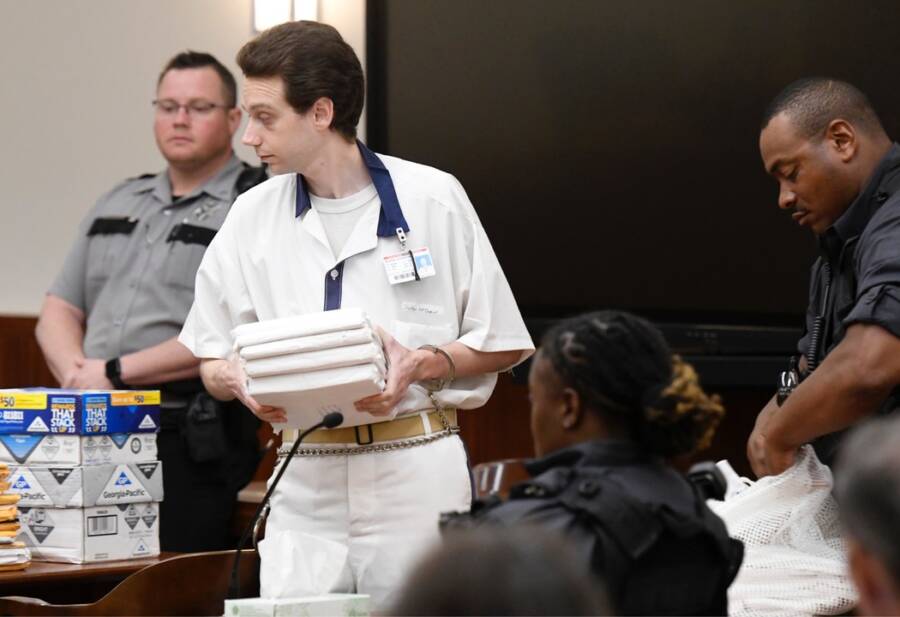
Each new discovery further solidified the prosecution’s case, revealing the extent of McDaniel’s premeditation and predatory focus.
The digital footprint extended beyond surveillance of Giddings specifically. Investigators uncovered numerous posts across various internet forums and blogs where McDaniel had articulated explicit hatred toward women and detailed violent fantasies.
This pattern of online expression provided critical insight into his psychology and motivations, transforming the case from a single horrific incident into evidence of deeper pathology.
Even before completing their forensic analysis, investigators felt confident they had identified Giddings’ killer based on McDaniel’s behavior and statements during initial questioning. On the same day Giddings’ remains were discovered, less than twelve hours after the morning interview at the apartment complex, police brought McDaniel back to the station for intensive interrogation.
The Interrogation: A Killer’s Fatal Mistake
When McDaniel returned to the police station on the evening of June 30, 2011, he presented a dramatically different persona than the nervous neighbor captured on television hours earlier. Now he sat with unnatural stillness, his responses reduced to monosyllables or the repeated phrase “I don’t know.”
Even during moments when detectives left the room—periods typically marked by fidgeting, pacing, or other signs of stress in suspects—McDaniel remained frozen in place, barely moving.
The interrogation extended through midnight and into the early morning hours of July 1st. Detective David Patterson led the questioning, pressing McDaniel about his knowledge of Giddings’ fate and location. Patterson pointedly noted the stark contrast between McDaniel’s earlier willingness to speak freely with reporters and his current silence.
When Patterson demanded to know why McDaniel had “shut down,” the suspect offered only his standard non-response.
After hours of fruitless questioning, Detective Scott Chapman took over the interrogation. Chapman attempted a different approach, appealing to whatever conscience or humanity might exist beneath McDaniel’s stone-faced exterior.
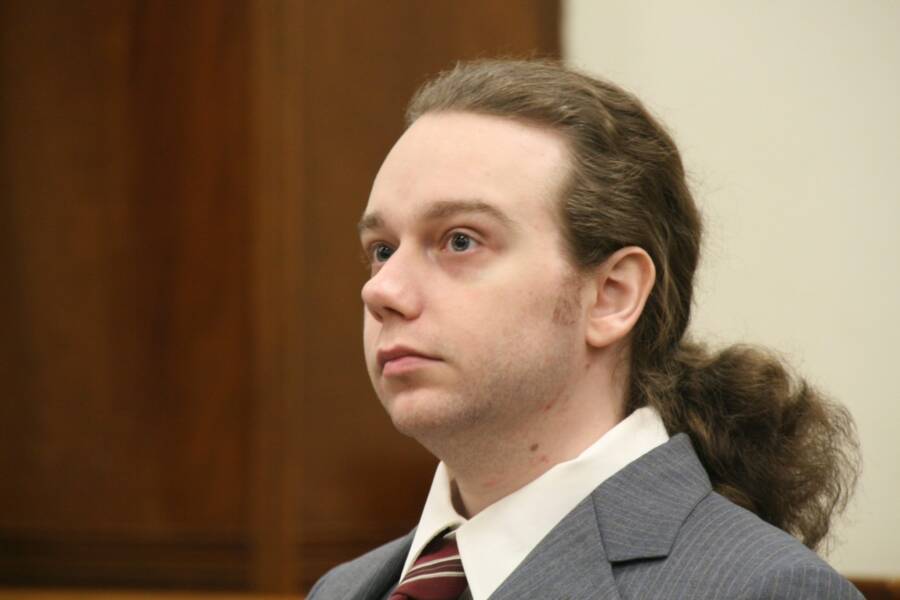
He suggested that providing his own account of events would prevent him from being portrayed as a monster, acknowledging that McDaniel must be feeling remorse. Despite the psychological weight clearly pressing down on the suspect, Chapman’s strategy failed to produce meaningful cooperation.
The breakthrough came when Detective Carl Fletcher entered the interrogation room and shifted the line of questioning. Fletcher raised the topic of condoms discovered during the search of McDaniel’s apartment. Given McDaniel’s claims of virginity and commitment to abstinence until marriage, the presence of contraceptives demanded explanation. Where had they come from, and why did he possess them?
McDaniel’s response opened an unexpected door. He admitted to entering fellow students’ apartments without permission while they were absent and stealing condoms from their belongings.
This confession—unrelated to the murder investigation but criminal nonetheless—provided police with grounds for immediate arrest on burglary charges. More importantly, it bought investigators time to compile the overwhelming evidence needed to prosecute McDaniel for Giddings’ murder.
The confession to murder itself came later. In 2014, McDaniel entered a guilty plea, providing detailed admissions about his crimes. He acknowledged using a stolen master key to access Giddings’ apartment, strangling her to death, and methodically dismembering her body with a hacksaw in the bathtub. The court sentenced him to life in prison for these horrific acts.
McDaniel’s legal battles did not end with his conviction. Since entering prison, he has filed multiple appeals challenging various aspects of his case. His claims have ranged from allegations of inadequate legal representation to accusations that the state improperly obtained defense trial materials.
Every appeal has been denied. Although he becomes eligible for parole consideration in 2041, legal experts universally predict he will die in prison, his life sentence reflecting the permanent nature of the loss he inflicted on Lauren Giddings, her family, and everyone who knew her.